
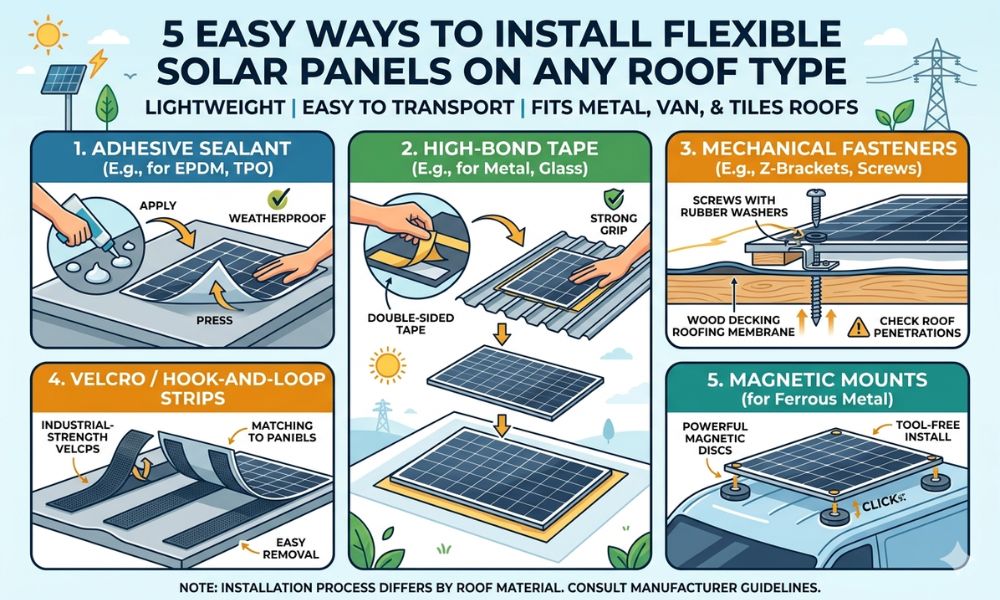
There are 5 Easy ways to install flexible solar panels on a roof of any kind, like a metal roof, a van roof, and tiles roof. These flexible solar panels are popular because they can be installed on any surface and carried very easily from one place ot another.
It is very important to install flexible solar panels on a roof, as it is a great way to get free energy and reduce your electricity bills, as well as earn money by selling extra solar energy.
It is also very important to note that these Flexible solar panels are lightweight, easy to transport, and can be installed on all roof types nowadays. However, the process of installation can differ depending on the material of your roof.
1. Asphalt Shingle Roof
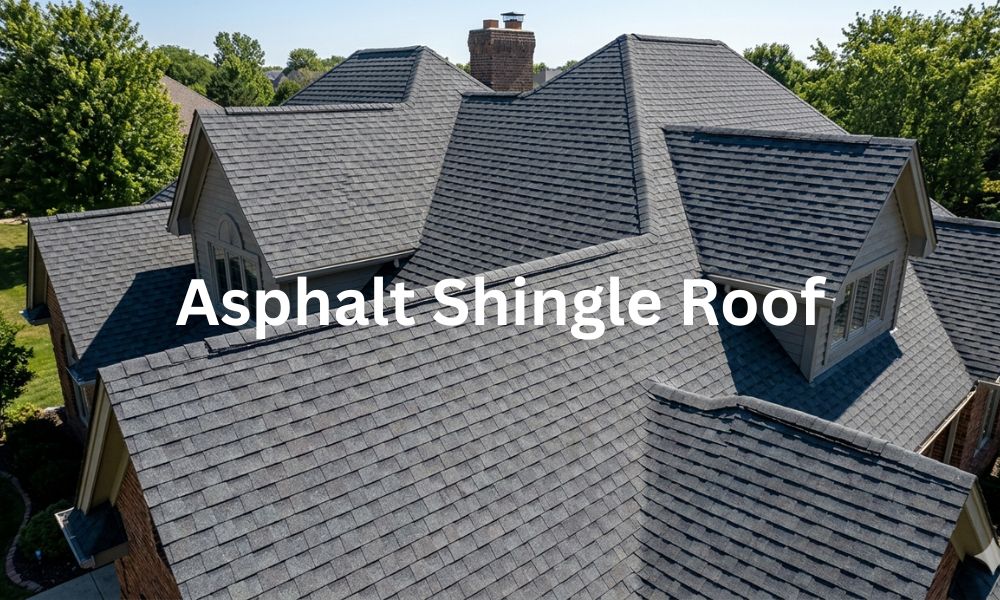
Asphalt shingles are one of the most widely used roofing materials, which makes them a common choice for installing flexible solar panels. Here’s a simple, step-by-step guide to help you install them safely and efficiently.
Step 1: Roof Preparation
Start by cleaning the installation area thoroughly. Remove dust, leaves, and any loose debris so the surface is clear. Take a moment to inspect the shingles for cracks or damage—fix any issues before moving forward to ensure a solid base.
Step 2: Measure and Plan the Layout
Carefully measure the space where the panel will go and mark the position. Make sure the placement allows maximum sunlight exposure throughout the day for better energy output.
Step 3: Install the Mounting Brackets
Use a mounting system that’s compatible with flexible solar panels and asphalt roofs. If required, drill small pilot holes and secure the brackets using weather-resistant screws. Ensure everything is level, properly aligned, and securely fastened to prevent movement or leaks.
Step 4: Secure the Flexible Panel
Place the solar panel onto the mounted brackets and fasten it securely using the recommended clips or screws. Double-check that the panel is stable and firmly in place.
Step 5: Electrical Connections
Connect the panel’s cables to your inverter, battery storage, or home electrical system. Follow proper wiring guidelines and manufacturer instructions to ensure safe and efficient power flow. Make sure all connections are tight and protected from weather exposure.
2. Metal Roofs
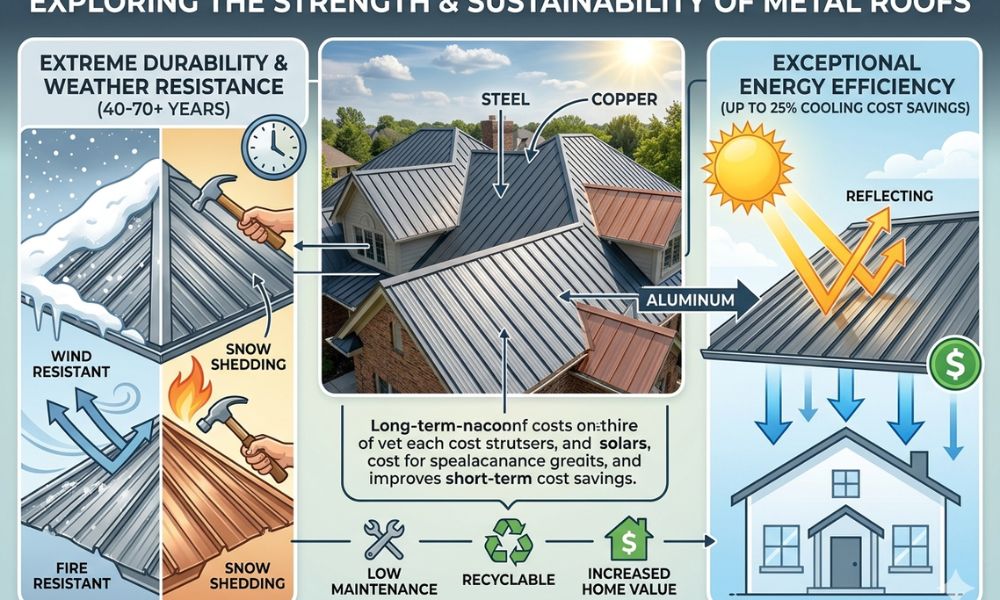
It is also very informative news that these Metal roofs last a very long time (around 40–70+ years) and are very strong in all types of weather, like snow or rain. They also help save energy by reflecting heat from the sun, which can reduce cooling costs by up to 25%. The most common materials used are steel, aluminium, and copper.
Step 1: Prepare the Roof
Start by cleaning the metal roof properly to remove dust, grease, or rust. A clean surface helps the solar panel stick better and last longer. Also, check for any dents or damage and fix them before moving forward.
Step 2: Install the Mounting System
Use a mounting system specially made for metal roofs. If needed, drill holes and attach the brackets with strong screws. Make sure the brackets are straight and tightly fixed so they can safely hold the panel.
Step 3: Attach the Solar Panel
Place the flexible solar panel on the mounting brackets carefully. Secure it using the provided fasteners, ensuring it is firmly attached and does not move or shift.
Step 4: Connect the Wiring
Connect the solar panel wiring to your home’s electrical system or a battery. Always follow the manufacturer’s instructions and double-check that all connections are safe and secure.
3. Tile Roofs
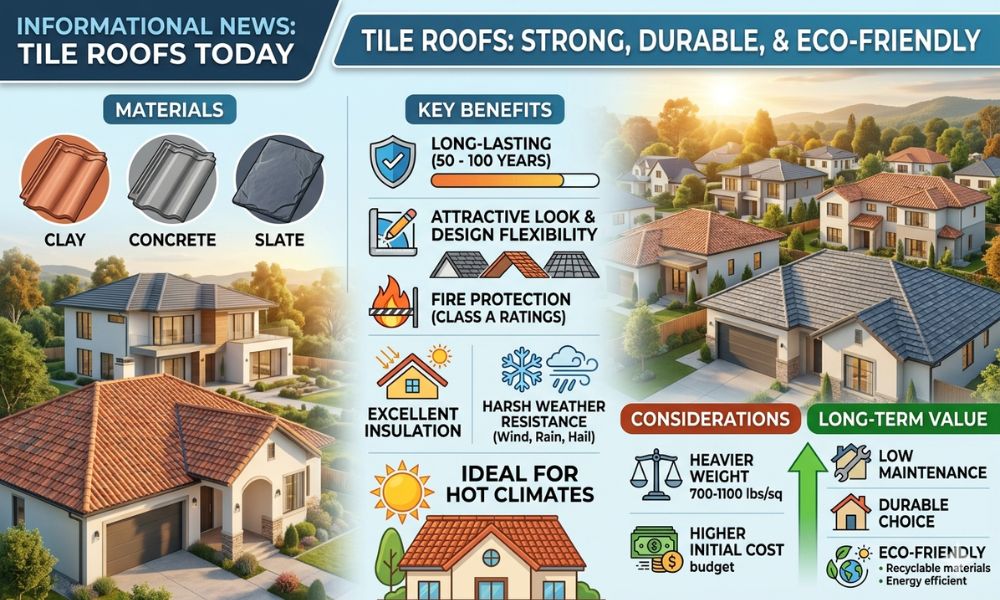
It is also informative news that these Tile roofs are strong and long-lasting roofing systems, usually made from clay, concrete, or slate, nowadays in the world. They can last around 50 to 100 years and are known for their attractive look and design flexibility. These roofs provide excellent fire protection, good insulation, and strong resistance to harsh weather, making them perfect for hot climates.
Although tile roofs are heavy and may cost more at the beginning, they need very little maintenance over time. They are also considered eco-friendly, which makes them a smart and durable choice for homeowners.
Step-by-Step Guidelines For Flexible Solar Panels Installation on Tile Roof
Step 1: Prepare the Roof
Start by cleaning the tiles and the installation area to remove dust and dirt. Check for any loose or broken tiles and repair them before installing the solar panel.
Step 2: Install the Mounting System
Use a mounting system made for tile roofs. Try to install brackets without drilling into the tiles by using special clips that attach to the roof structure. If drilling is required, use the right drill bit and work carefully to avoid cracking the tiles.
Step 3: Attach the Solar Panel
Place the flexible solar panel on the mounting brackets. Secure it properly with the provided fasteners so it stays firm and does not move.
Step 4: Connect the Wiring
Connect the panel wiring to your home’s electrical system or a battery. Follow the manufacturer’s instructions and ensure all connections are secure.
4. Flat Roofs
It is also very important information that these Flat roofs are simple and common, especially in modern homes and commercial buildings nowadays. They provide a large, open surface, making them ideal for installing solar panels at the best angle using adjustable mounting systems.
These Flat roofs are easy to access, which also makes installation and maintenance much safer and more convenient for installing solar panels to get free solar power.
Step 1: Prepare the Roof
Start by cleaning the flat roof surface properly to remove dust and debris. Check for any cracks, holes, or damage in the waterproof layer and repair them before installation.
Step 2: Install the Mounting System
Use a mounting system designed for flat roofs. Install the brackets securely on the roof structure and make sure they are level. If the roof has a waterproof membrane, use proper flashing to prevent water leaks.
Step 3: Attach the Solar Panel
Place the flexible solar panel on the mounting brackets. Secure it with the provided fasteners so it stays firmly in place and does not move.
Final words
There are 5 Easy ways to install flexible solar panels on a roof of any kind, like a metal roof, a van roof, and tiles roof. These flexible solar panels are popular because they can be installed on any surface and carried very easily from one place ot another.
It is very important to install flexible solar panels on a roof, as it is a great way to get free energy and reduce your electricity bills, as well as earn money by selling extra solar energy.