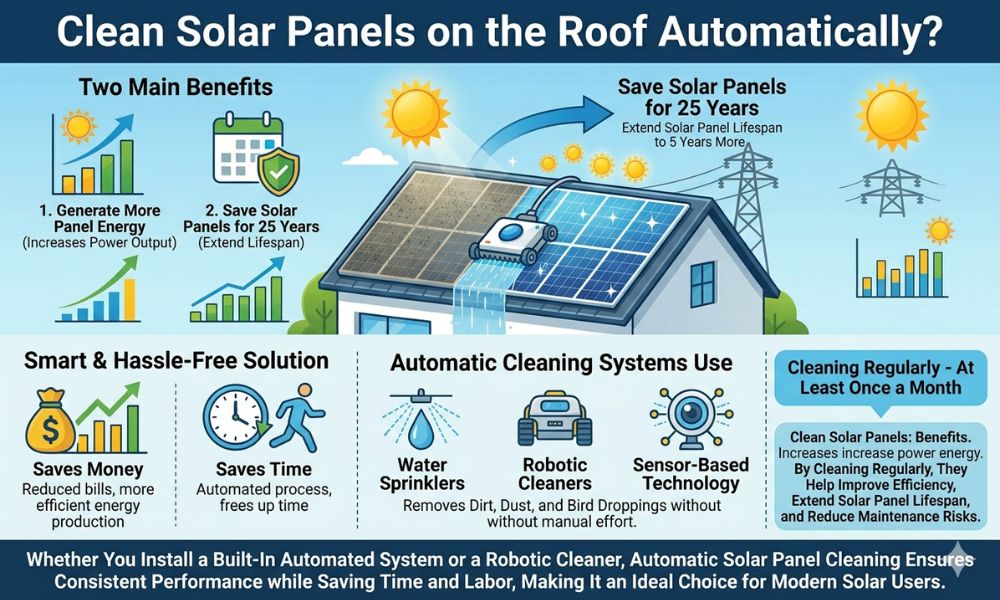
Cleaning Solar Panels on the Roof Automatically is important because it has two benefits: to generate more energy and prolong the lifespan of solar panels for 25 years. These Automatic roof cleaning systems offer a smart and hassle-free solution to this problem to save money as well as time. These cleaning solar panel systems use water sprinklers, robotic cleaners, or sensor-based technology to remove dirt, dust, and bird droppings without manual effort.
This is also a very important point that by cleaning solar panels regularly at least once a month, they help improve efficiency, extend solar panel lifespan to 5 years, and reduce maintenance risks. Whether you install a built-in automated system or a robotic cleaner, automatic solar panel cleaning ensures consistent performance while saving time and labor, making it an ideal choice for modern solar users in the world, like usa and china in 2026.
Why Do Solar Panels Need to Be Clean?
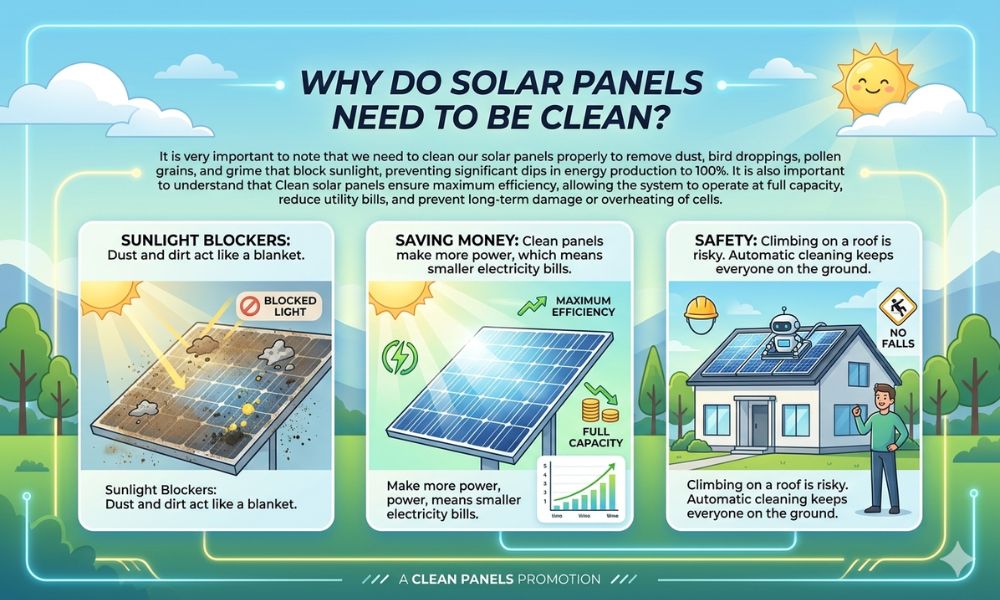
It is very important to note that we need to clean our solar panels properly to remove dust, bird droppings, pollen grains, and grime that block sunlight, preventing significant dips in energy production to 100%.
It is also important to understand that Clean solar panels ensure maximum efficiency, allowing the system to operate at full capacity, reduce utility bills, and prevent long-term damage or overheating of cells.
- Sunlight Blockers: Dust and dirt act like a blanket.
- Saving Money: Clean panels make more power, which means smaller electricity bills.
- Safety: Climbing on a roof is risky. Automatic cleaning keeps everyone on the ground.
Method 1: Robotic Solar Cleaners (The “Roomba” for Roofs)
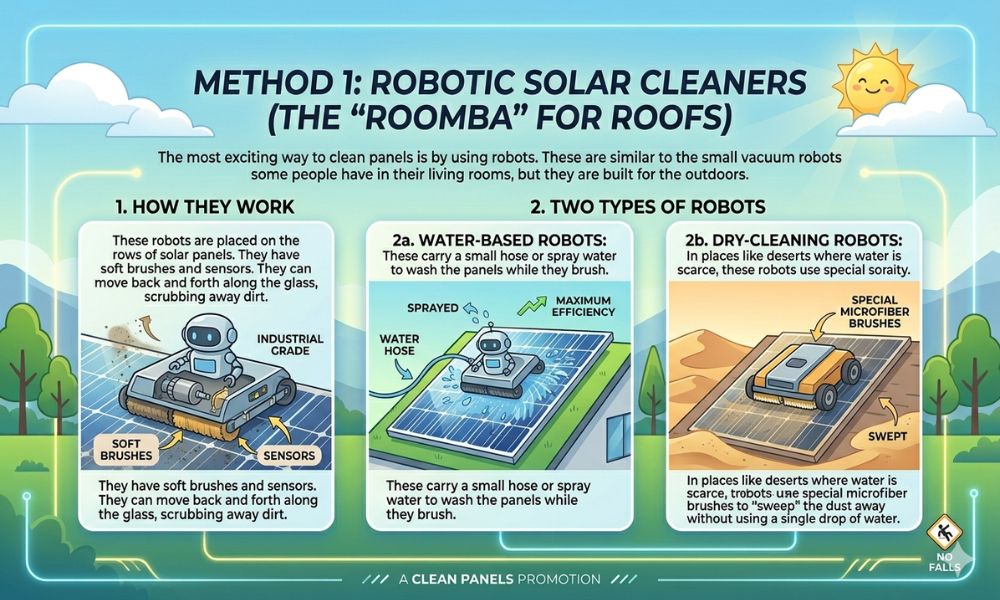
The most exciting way to clean panels is by using robots. These are similar to the small vacuum robots some people have in their living rooms, but they are built for the outdoors.
1. How They Work
These robots are placed on the rows of solar panels. They have soft brushes and sensors. They can move back and forth along the glass, scrubbing away dirt.
2. Two Types of Robots
- Water-Based Robots: These carry a small hose or spray water to wash the panels while they brush.
- Dry-Cleaning Robots: In places like deserts where water is scarce, these robots use special microfiber brushes to “sweep” the dust away without using a single drop of water.
Method 2: Sprinkler Systems (The “Rain Makers”)
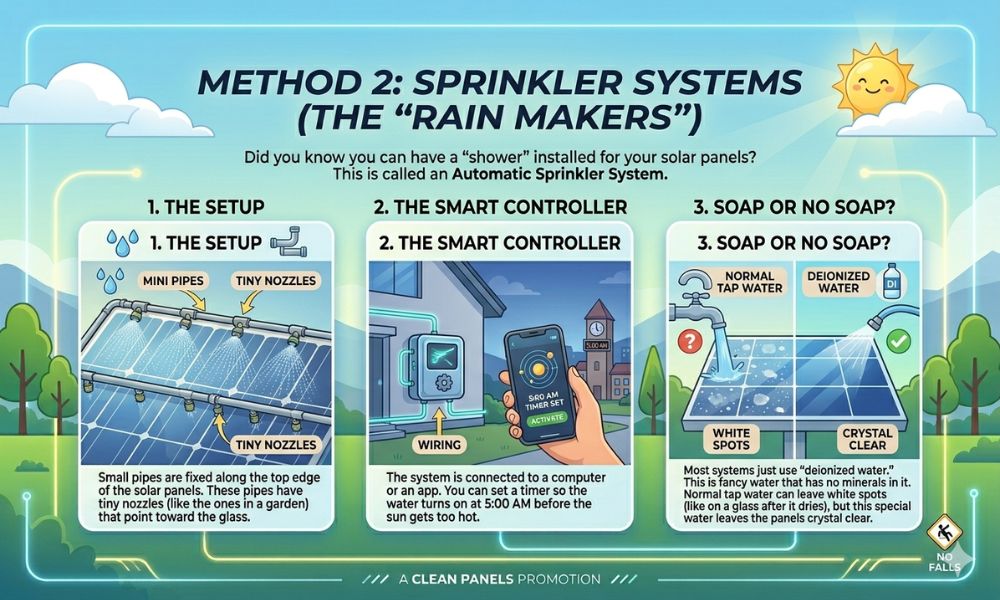
Did you know you can have a “shower” installed for your solar panels? This is called an Automatic Sprinkler System.
1. The Setup
Small pipes are fixed along the top edge of the solar panels. These pipes have tiny nozzles (like the ones in a garden) that point toward the glass.
2. The Smart Controller
The system is connected to a computer or an app. You can set a timer so the water turns on at 5:00 AM before the sun gets too hot.
3. Soap or No Soap?
Most systems just use “deionized water.” This is fancy water that has no minerals in it. Normal tap water can leave white spots (like on a glass after it dries), but this special water leaves the panels crystal clear.
Method 3: Self-Cleaning Nano-Coating
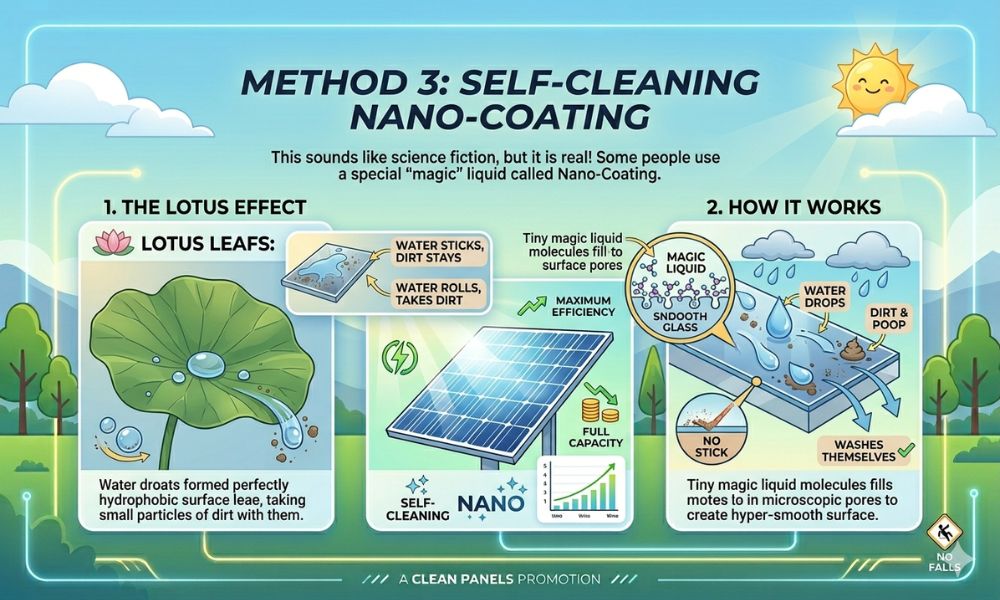
This sounds like science fiction, but it is real! Some people use a special “magic” liquid called Nano-Coating.
1. The Lotus Effect
Have you ever seen a lotus leaf? Water droplets just roll right off it, taking the dirt with them. Nano-coating does the same for solar panels.
2. How it Works
When you spray this coating on the panels, it makes the glass super smooth. When it rains, the water can’t “stick” to the glass. Instead, it forms big drops that slide off quickly, carrying all the dust and bird poop away. It makes the panels “wash themselves” whenever it rains!
Method 4: Vibrating Technology
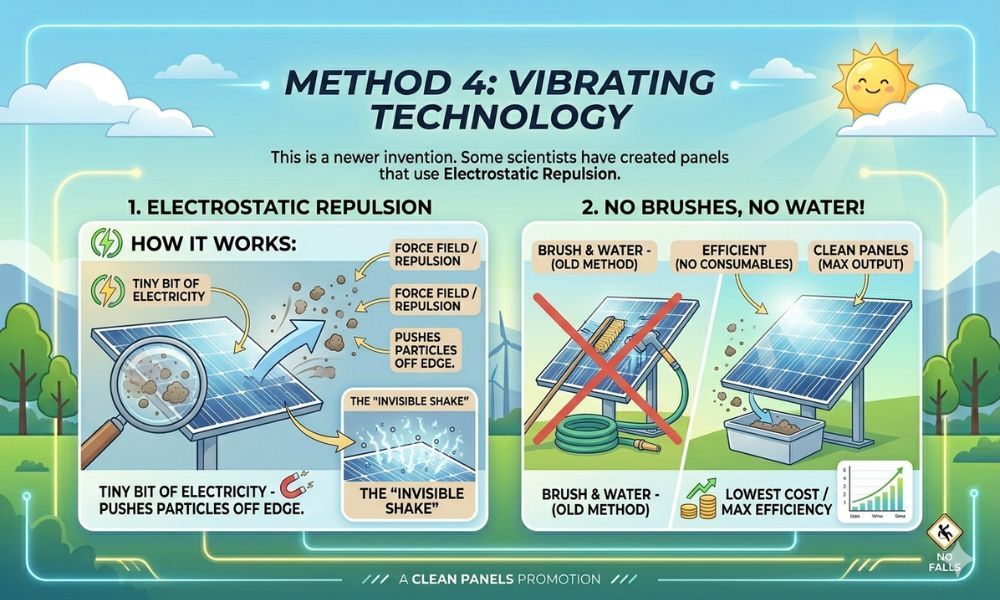
This is a newer invention. Some scientists have created panels that use Electrostatic Repulsion.
Instead of using water or brushes, the panels use a tiny bit of electricity to create a “vibration” or a “force field.” This force pushes the dust particles off the edge of the glass. It’s like shaking a rug to get the dust out, but you can’t see the shaking!
Comparing Different Cleaning Methods
| Method | Uses Water? | Uses Brushes? | Best For… |
| Robots | Sometimes | Yes | Large solar farms |
| Sprinklers | Yes | No | Home roofs |
| Nano-Coating | Only Rain | No | Areas with lots of rain |
| Vibrations | No | No | Deserts and Space |
Things to Remember Before Cleaning
Even though these systems are automatic, there are three important rules to follow:
- Never Clean in the Hot Sun: If you spray cold water on a hot solar panel, the glass might crack! It’s best to clean them early in the morning or late at night.
- Avoid Harsh Chemicals: Never use bleach or strong soap. It can damage the special coating on the panels.
- Check the Sensors: If you use a robot, make sure its “eyes” (sensors) are clean so it doesn’t fall off the roof!
How to Clean Your Solar Panels on the Roof Automatically
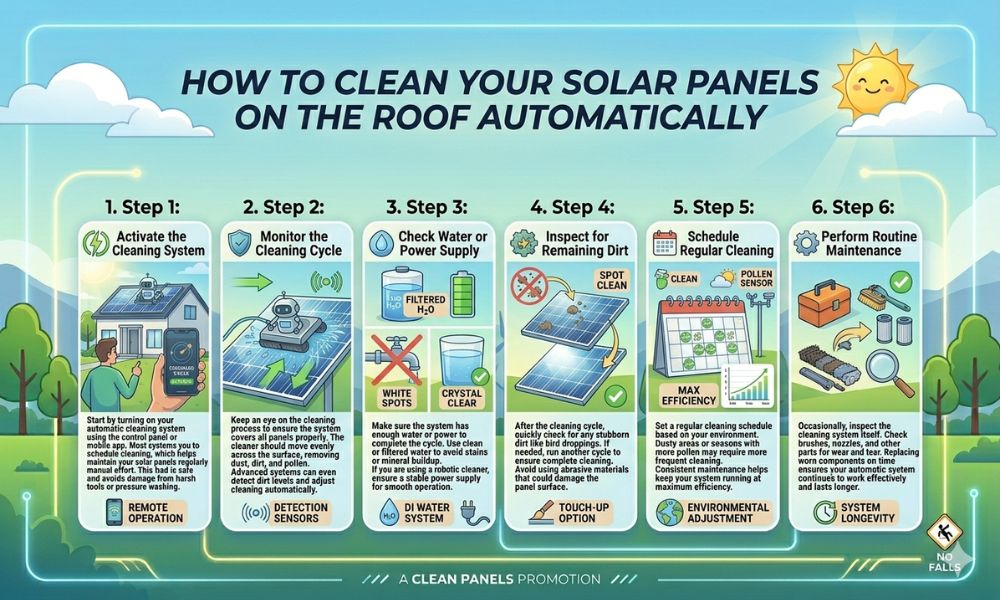
Step 1: Activate the Cleaning System
Start by turning on your automatic cleaning system using the control panel or mobile app. Most systems allow you to schedule cleaning, which helps maintain your solar panels regularly without manual effort. This method is safe and avoids damage from harsh tools or pressure washing.
Step 2: Monitor the Cleaning Cycle
Keep an eye on the cleaning process to ensure the system covers all panels properly. The cleaner should move evenly across the surface, removing dust, dirt, and pollen. Advanced systems can even detect dirt levels and adjust cleaning automatically.
Step 3: Check Water or Power Supply
Make sure the system has enough water or power to complete the cycle. Use clean or filtered water to avoid stains or mineral buildup. If you are using a robotic cleaner, ensure a stable power supply for smooth operation.
Step 4: Inspect for Remaining Dirt
After the cleaning cycle, quickly check for any stubborn dirt like bird droppings. If needed, run another cycle to ensure complete cleaning. Avoid using abrasive materials that could damage the panel surface.
Step 5: Schedule Regular Cleaning
Set a regular cleaning schedule based on your environment. Dusty areas or seasons with more pollen may require more frequent cleaning. Consistent maintenance helps keep your system running at maximum efficiency.
Step 6: Perform Routine Maintenance
Occasionally, inspect the cleaning system itself. Check brushes, nozzles, and other parts for wear and tear. Replacing worn components on time ensures your automatic system continues to work effectively and lasts longer.
Top 5 Benefits of Automatic Solar Panel Cleaning
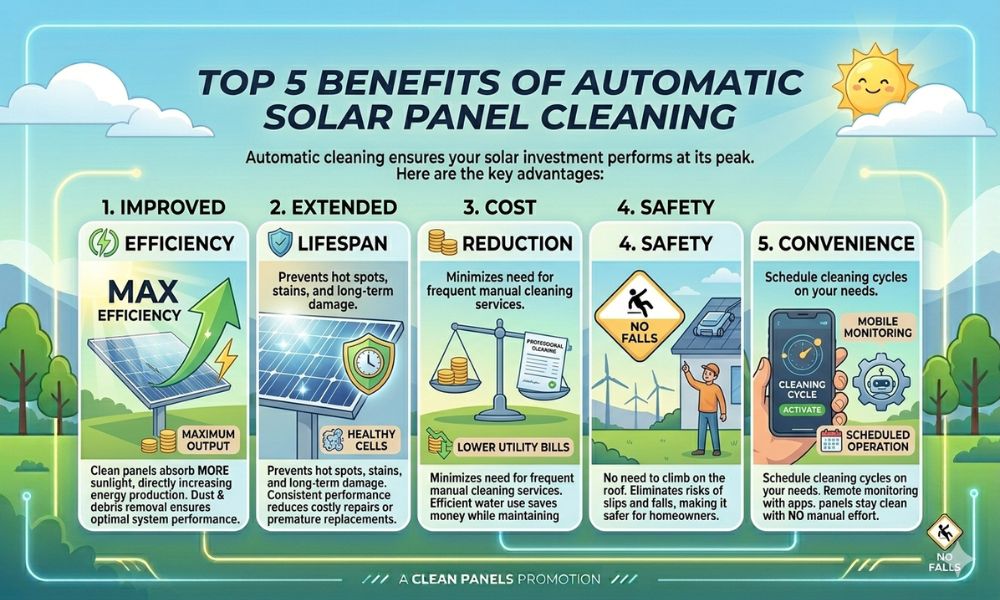
There, we will also discuss the Top 5 Benefits of Automatic Solar Panel Cleaning, and here we will explore them one by one as follows.
Improved Efficiency
Clean solar panels absorb more sunlight, which directly increases energy production. Automatic cleaning systems remove dust and debris regularly, ensuring your system performs at its best.
Extended Lifespan
Regular cleaning helps prevent hot spots, stains, and long-term damage. Well-maintained panels last longer and deliver consistent performance, reducing the chances of costly repairs or replacements.
Cost Reduction
Automatic systems reduce the need for frequent professional cleaning services. They also use water efficiently, helping you save money in the long run while maintaining optimal performance.
Safety
With automatic cleaning, there’s no need to climb onto the roof. This eliminates the risks of slips and falls, making it a safer option for homeowners.
Convenience
You can schedule cleaning cycles according to your needs. Many systems also offer remote monitoring through mobile apps, so your panels stay clean without any manual effort.
Final words
Cleaning Solar Panels on the Roof Automatically is important because it has two benefits: to generate more energy and prolong the lifespan of solar panels for 25 years.
These Automatic roof cleaning systems offer a smart and hassle-free solution to this problem to save money as well as time.
These cleaning solar panel systems use water sprinklers, robotic cleaners, or sensor-based technology to remove dirt, dust, and bird droppings without manual effort.