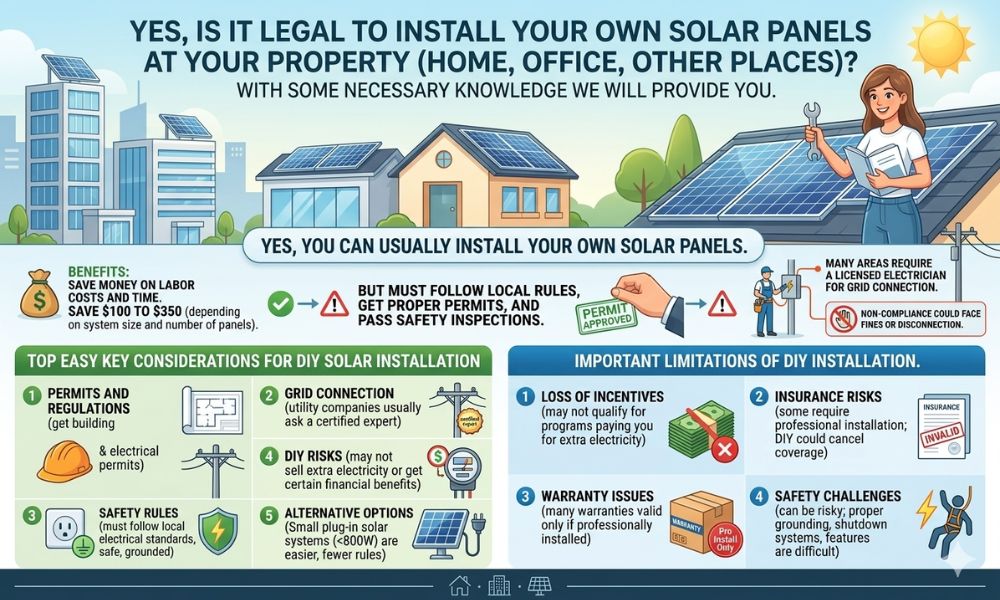
Yes, Is It Legal to Install Your Own Solar Panels at your property, like your home, office, and other places where you want, with some necessary knowledge that we will provide you. Installing our own solar panels has many benefits, like we can save our money on labor costs and time as well.
If you install your own solar panels, then you save a lot of money from 100$ to 350$ per solar plate or panel, depending on the size and number of solar panels.
Yes, you can usually install your own solar panels. However, you must follow local rules, get the proper permits, and pass safety inspections. In many areas, a licensed electrician is required to connect the system to the main power grid. If you don’t follow these rules, you could face fines or have your system disconnected.
How Much Can We Save by Installing Our Own Solar Panels?
This is also informative news that installing your own solar panels can lead to huge savings, especially on labor costs in the world in 2026. Instead of paying a professional installer, we can cut expenses by $10,000 or even more, bringing the total system cost to under $2 per watt in many cases in the USA, UK, and China in 2026.
It is also important to note that over the long term, the savings really add up. There are also Most homeowners can save anywhere between $37,000 and $154,000 over 25 years, depending on electricity prices in their area.
Top Easy Key Considerations for DIY Solar Installation
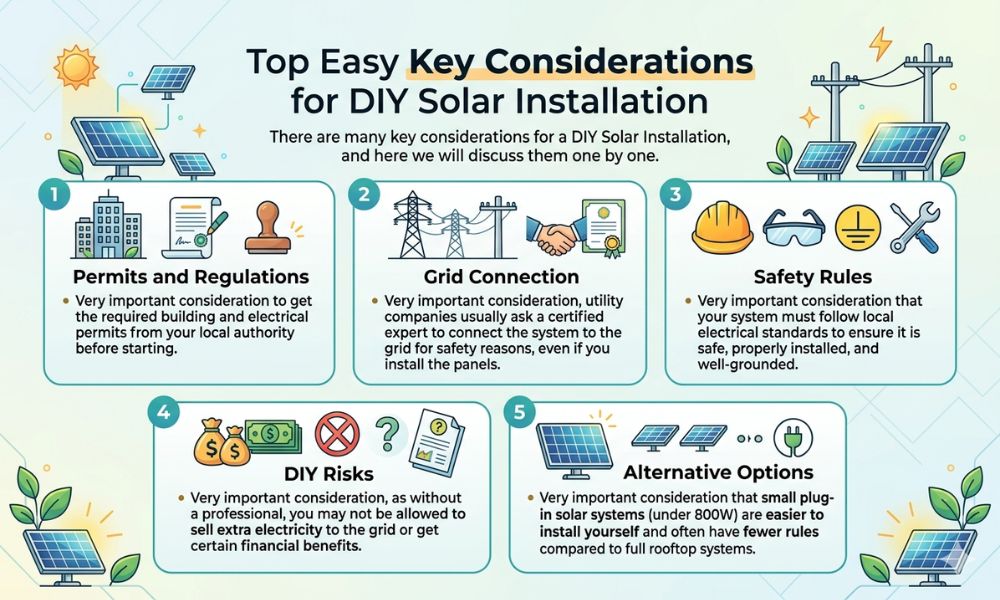
There are many key considerations for a DIY Solar Installation, and here we will discuss them one by one.
Permits and Regulations
This is a very important consideration that, before starting, you need to get the required building and electrical permits from your local authority.
Grid Connection
This is a very important consideration, even if you install the panels yourself; utility companies usually ask a certified expert to connect the system to the grid for safety reasons.
Safety Rules
This is a very important consideration that your system must follow local electrical standards to ensure it is safe, properly installed, and well-grounded.
DIY Risks
This is a very important consideration, as if you install it without a professional, you may not be allowed to sell extra electricity to the grid or get certain financial benefits.
Alternative Options
This is a very important consideration that small plug-in solar systems (under 800W) are easier to install yourself and often have fewer rules compared to full rooftop systems.
Important Limitations of DIY Installation
There are many important limitations of DIY Installation, and here we will discuss them one by one.
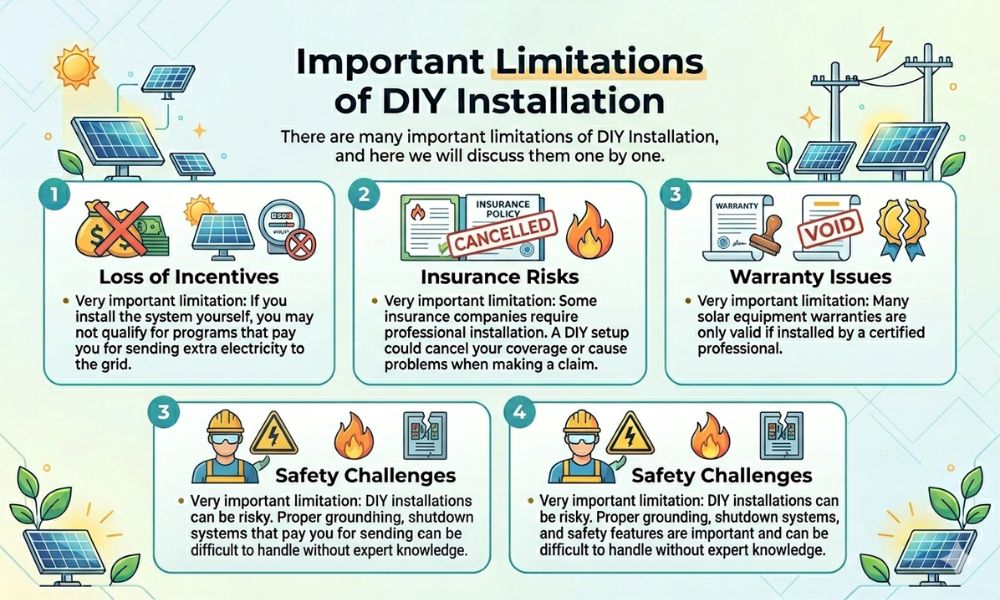
Loss of Incentives: If you install the system yourself, you may not qualify for programs that pay you for sending extra electricity to the grid.
Insurance Risks: Some insurance companies require professional installation. A DIY setup could cancel your coverage or cause problems when making a claim.
Warranty Issues: Many solar equipment warranties are only valid if installed by a certified professional.
Safety Challenges: DIY installations can be risky. Proper grounding, shutdown systems, and safety features are important and can be difficult to handle without expert knowledge.
Can You Legally Install Solar Panels Yourself?
This is very informative news that the short answer is yes, in many cases, you can legally install your own solar panels, but we need to follow strict conditions that apply.
There are some Laws vary by country, state, and even local municipalities. While DIY installation is often allowed, it typically requires compliance with:
- Building codes
- Electrical regulations
- Permit approvals
- Inspection requirements
Advantages of Installing Your Own Solar Panels
There are also many Advantages of Installing Your Own Solar Panels, and here we will discuss them one by one as follows
Cost Savings
Installing your own solar panels can significantly reduce overall system costs. By avoiding professional labor charges, we can save a large portion of the budget and invest more in high-quality components.
Full Control Over the System
DIY installation gives us complete control over the design, layout, and equipment selection. We can choose the best panels, inverter, and setup based on our specific energy needs and budget.
Learning and Skill Development
Handling the installation ourselves allows us to gain valuable technical knowledge. We learn how solar systems work, which helps in future maintenance and troubleshooting.
Flexible Installation Schedule
We can install the system at our own pace without depending on contractor availability. This flexibility makes it easier to plan the project according to our time and convenience.
Customization Options
DIY solar projects allow us to customize every detail, from panel placement to battery storage. This ensures the system is perfectly tailored to our home and energy usage.
Personal Satisfaction
Completing a solar installation ourselves brings a strong sense of achievement. It’s rewarding to generate clean energy using a system we built with our own effort.
DIY vs Professional Installation: Which Is Better?
| Feature | DIY Installation | Professional Installation |
|---|---|---|
| Cost | Lower | Higher |
| Legal Complexity | High | Low |
| Safety | Moderate Risk | High Safety |
| Warranty | Limited | Full Coverage |
| Approval Process | Difficult | Easier |
Step-by-Step Legal Process for DIY Solar Installation
Step 1: Check Local Regulations
Before starting, we must review local laws and policies regarding solar installations. This helps ensure our project follows all legal requirements and avoids future issues.
Step 2: Design Your Solar System
We create a proper system design based on our energy needs. This includes panel placement, inverter selection, and wiring layout for safe and efficient performance.
Step 3: Apply for Permits
We need to submit our system plan to the local authorities for approval. Getting the required permits is essential to make the installation legally valid.
Step 4: Purchase Certified Equipment
Using approved and certified solar components ensures safety and compliance with regulations. It also improves system reliability and lifespan.
Step 5: Install the System
We carefully install the panels, mounting structure, and wiring according to best practices. Proper installation is important for both performance and safety.
Step 6: Hire a Licensed Electrician (If Required)
In many cases, a professional electrician is needed for final electrical connections. This ensures the system meets legal and safety standards.
Step 7: Inspection and Approval
After installation, the system must be inspected by authorities. Once approved, we can legally operate the solar system without any concerns.
Legal Requirements for DIY Solar Installation
There are also many Legal Requirements for DIY Solar Installation, and here we will discuss them one by one as follows
1. Building Permits Are Mandatory
Before installing solar panels, most jurisdictions require a building permit. This ensures that your structure can support the system and that the installation meets safety codes.
Key considerations include:
- Roof strength and load capacity
- Wind and weather resistance
- Proper mounting systems
Without approval, your installation may be deemed illegal—even if technically functional.
2. Electrical Codes Must Be Followed
Solar systems involve complex electrical work, which must comply with national and local electrical standards.
Important factors:
- Proper wiring and grounding
- Inverter installation standards
- Protection systems (circuit breakers, surge protection)
In many regions, only a licensed electrician can legally connect your system to the main electrical panel.
3. Grid Connection Approval
If you plan to connect your system to the grid (on-grid system), you must obtain permission from your local utility provider.
Requirements often include:
- Application submission
- System design approval
- Safety certification
- Net metering agreement
Without this approval, feeding electricity into the grid is illegal.
4. Inspection and Certification
After installation, authorities usually require an inspection to verify compliance. Only after passing inspection will your system be approved for operation.
Inspections check:
- Installation quality
- Electrical safety
- Code compliance
Final words
This is also informative news that installing your own solar panels can lead to huge savings, especially on labor costs in the world in 2026. Instead of paying a professional installer, we can cut expenses by $10,000 or even more, bringing the total system cost to under $2 per watt in many cases in the USA, UK, and China in 2026.
Yes, Is It Legal to Install Your Own Solar Panels at your property, like your home, office, and other places where you want, with some necessary knowledge that we will provide you. Installing our own solar panels has many benefits, like we can save our money on labor costs and time as well.